Seed Planters and Context Hoarders: What Happens When Execution Gets Cheap
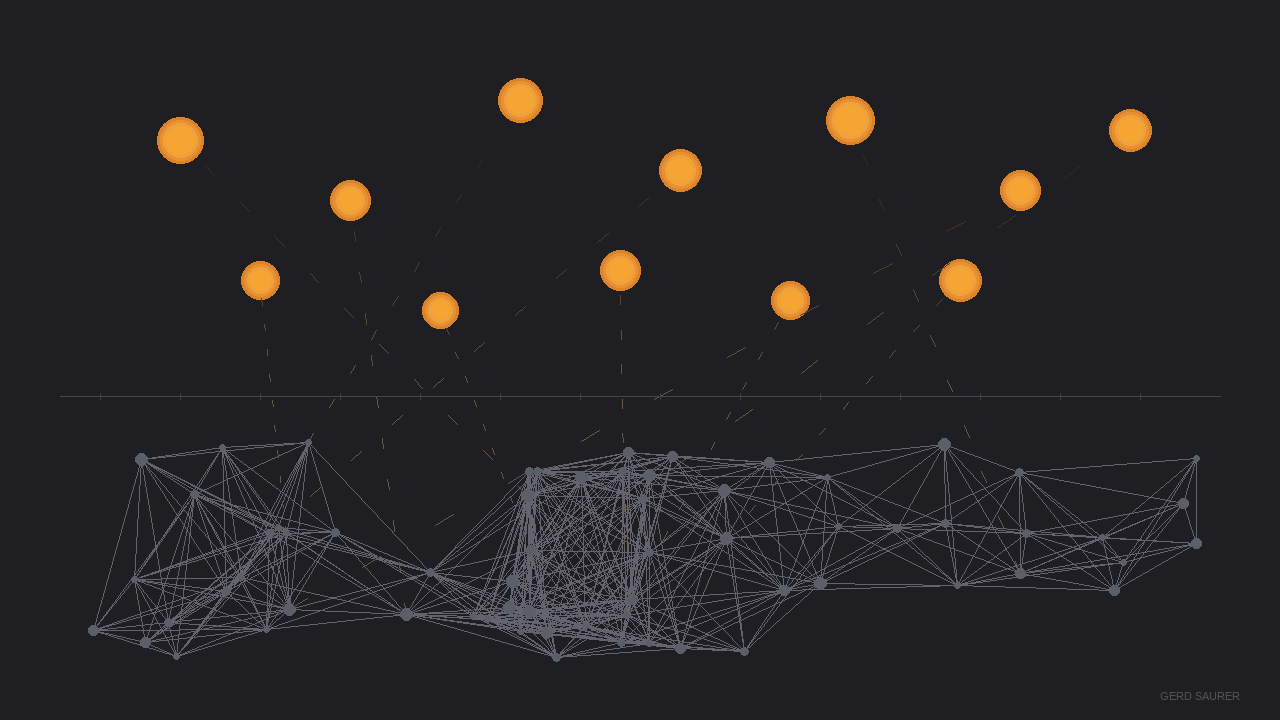
When AI makes credible prototypes cheap, organizations that reward visible initiation over durable execution create a rational incentive to hoard the context that establishes ownership.
Organizations Are Rewarding Seed Planters
Organizations are adjusting how they recognize valuable work. As AI agents make early execution cheaper for a growing class of tasks, attention shifts toward the people who plant seeds: those who name the right problem, frame a solution, and use an agent to turn it into something others can see and try. The logic is consistent. When one person can produce the first credible version without a large team or months of effort, knowing what to plant appears to be the scarce contribution.
This shift is not irrational. Identifying the right problem and framing it well are genuine contributions. Rewarding seed planters makes sense in principle.
The problem is what happens to collaboration when an organization applies that logic through individual performance ratings.
A Seed Is Not Yet Executable
A raw seed is not something an agent can cultivate. “We should rebuild the onboarding flow” is a seed. It becomes executable only when someone adds the specific failure modes in the current process, the constraints that previous attempts ran into, the undocumented dependencies between systems, the political reasons a simpler approach was abandoned last year.
Without those additions, the seed sits inert. A plan alone is not enough, and an agent given only a bare idea produces generic output disconnected from the actual problem.
Context Is the Soil
The knowledge that transforms a seed into something executable is context. It lives in people who have spent time in the problem, asked questions, maintained relationships, and remembered what others forgot. It does not appear in wikis or specification documents because it was never formal enough to write down.
Context is the soil. It is largely invisible, accumulated slowly, and difficult to synthesize on demand. The person who holds deep context controls whether and how fast a seed grows into a working solution.
The Small Plant Establishes Ownership
AI changes what one person can do with that soil. It can shorten the distance between a context-rich idea and a credible working artifact: a prototype, a first version, or a workflow that solves the problem well enough to demonstrate the direction.
That small plant matters more than the plan. It makes the idea tangible, proves that it can grow, and establishes visible ownership. It does not mean the work is finished. Production hardening, integration, adoption, maintenance, and operational accountability may still require sustained collaboration. But many recognition systems assign credit at the moment the first green shoots appear, not when the plant becomes durable.
Why Sharing the Soil Becomes Irrational
Here is where collaboration breaks.
If an organization attributes credit to whoever produces the first credible plant, then sharing your context with a colleague creates a specific risk: you transfer the ability for them to build the prototype that establishes ownership. The colleague who now holds your soil can cultivate the seed themselves, or grow a better variation, faster than you can.
Your context made the first version possible, but the attribution system records the person who made it visible. When agents handle the early cultivation, the visible contribution shrinks to “who showed the first working version” rather than “who supplied the soil” or “who made it durable.”
The rational individual response: protect your soil until you have produced the small plant and secured recognition. Share only after ownership is clear. Then move immediately to the next seed, leaving others to mature the first version, because its recognition window has closed.
The Race to Plant the Next Seed
This dynamic intensifies under specific conditions.
Strongly differentiated individual ratings. When a small number of people receive disproportionate rewards, the cost of enriching someone else’s soil rises.
Frequent attribution of first versions. When organizations track who initiated what, they define a currency. People optimize for a portfolio of visible starts over the slower work of making any one of them robust.
Short evaluation cycles. When performance is assessed before seeds mature, planters are evaluated on visibility, not harvest. Long-term collaborative refinement becomes invisible work.
Low-friction access to AI tools and tokens. Cheap execution is not available merely because the technology exists. People need access to capable models, enough token capacity to use them routinely, and organizational permission to apply them to real work. Many organizations still do not provide that access, or provide it only to selected teams.
Cheap early execution of context-rich work. Given that access, this is the second enabling condition. AI does not make planning sufficient or eliminate the work required for production. It makes the distance from a context-rich idea to a credible first artifact short enough for one person to cross it, establish ownership, and move on before harder cultivation begins.
Where the Metaphor Stops Working
This mechanism applies specifically where people have easy access to capable AI tools and can turn deep context into a credible first version. That access remains uneven, so the dynamic may appear in one team while being absent from the organization around it. And a working prototype is not durable execution. Complex system integration, production hardening, adoption, regulated domains requiring human judgment, and genuinely novel research still demand expensive collaborative effort. In those areas, execution continues to force visibility and interdependence.
Cheap execution does not break teamwork on its own. Individual attribution systems combined with cheap execution do. The same reduction in execution cost could increase collaboration in an organization that measures teams, rewards people who make others’ seeds grow, or maintains transparent lineage showing how a raw seed became an executable specification through many contributors’ context.
What to Watch For
This is a diagnostic observation, not a prescription. But there are signs that an organization may be experiencing this inversion:
People describe ideas in less specific terms when others are present. Context surfaces only in private conversations. Prototypes multiply while ownership of production hardening, integration, and adoption remains unclear. The same people repeatedly launch visible first versions while others repeatedly inherit the work of making them durable. People known for deep institutional context become less accessible rather than more sought after.
The underlying question is whether your recognition system was designed for a world where execution was expensive and collaboration was visible by necessity, and whether that design still produces the behavior it intends.